
We will have 2 plenary speakers at the ASA this year.
Day 2 Past and Present Radar Initiatives at DSTG
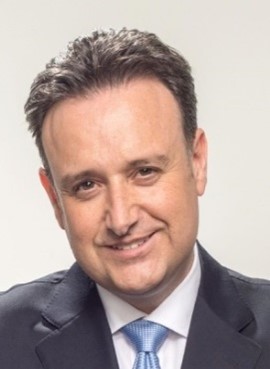
Dr Giuseppe Aureliano Fabrizio received his B.E. and Ph.D. degrees from the School of Electrical and Electronic Engineering at Adelaide University, Australia, in 1992 and 2000, respectively. Since 1993, he has been with the Australian Defence Science and Technology Group (DSTG). From 2005 to 2015, he led the Signal Processing and Electronic Warfare (EW) capability in DSTG’s High-Frequency (HF) radar branch. In that role, he was responsible for innovative R&D including the practical implementation of robust array processing techniques and electronic protection algorithms to enhance the operational performance of sky-wave, surface-wave and line-of-sight HF radar systems. In 2007, he received DSTG’s Science and Engineering Excellence Award for technical contributions that enhance the operational capabilities of the Jindalee Operational Radar Network (JORN).
From 2016 to 2020, he transitioned to Group Leader for Microwave Radar Systems, where he was responsible for leading R&D and the delivery of science and technology (S&T) advice to Defence stakeholders to support a wide range of microwave radar capabilities, including Active Electronically Scanned Array (AESA) technologies applicable to air, maritime, and land domains. In that role, he established the wideband multifunction aperture program in collaboration with international government agencies, Defence industry partners and academic institutions. In his current role as the Research Leader for Radio Frequency (RF) Sensing and Electromagnetic Warfare (EW), he has responsibility for leading DSTG’s S&T capability in radar systems and EW across the full RF spectrum.
Dr. Fabrizio has actively participated in IEEE community activities and is the principal author of more than 70 journal and conference publications. He is twice the co-recipient of the IEEE M. Barry Carlton Award for the best paper published in the IEEE Transactions on Aerospace and Electronic Systems (AES), and he received the IEEE Fred Nathanson Memorial Radar Award in 2011 for his contributions to radar signal processing. He is a Fellow of the IEEE and has served as President of the AES Board of Governors from 2018-2019. He is an AES Society Distinguished Lecturer and delivered numerous OTHR tutorials as well as a plenary lecture as part of the IEEE Radar Conference series. He is the author of the text High Frequency Over-the-Horizon Radar – Fundamental Principles, Signal Processing and Practical Applications (McGraw-Hill, NY, 2013).
Day 3 DARPA Emon – Advantages of Spatially Varying Waveforms
Luke Rosenberg
Advanced Systems & Technologies, Lockheed Martin Australia
Antennas work by exciting them with current and then propagating electromagnetic waves. No matter what form they take, all electric currents follow Maxwell’s equations, which explain how electric and magnetic fields work. For most antennas, the wavefront that propagates has a constant wavefront. Spatially varying waveforms (SVW) arise as an alternate solution to Maxwell’s equations that exploits the Orbital Angular Momentum (OAM) present in an electromagnetic wave. A key property of an OAM wave is the rotating phase, hence the name ‘vortex radar’ that is often given to this phenomenon.
Lockheed Martin Australia’s Advanced Systems and Technologies (AST) in partnership with Lockheed Martin Advanced technology Laboratories (ATL) and the Royal Melbourne Institute of Technology (RMIT) have recently teamed up to begin research for the DARPA Emon program. Emon plans to study how SVWs can be exploited to detect targets at longer ranges (i.e. by increasing the radar cross section) and improve the quality of radar imagery.
This new approach could lead to significantly enhanced radar systems. Many potential benefits have been described in the literature and this program aims to validate them. They include:
- Being able to image targets without requiring motion of the radar or target platforms.
- Improving the quality of radar images that can be further exploited for target classification.
- The ability to detect targets at longer ranges, by reducing the observed radar cross section
- Providing the ability to measure rotational motion of a target.
This presentation describes the Emon program and initial progress over the first 6 months of the program.
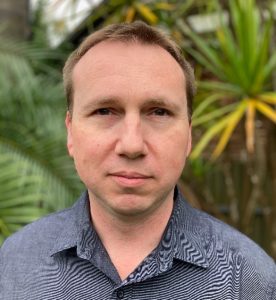
Luke Rosenberg received the bachelor’s degree in electrical and electronic engineering, the master’s degree in signal and information processing, and the PhD degree from the University of Adelaide, Australia, in 1999, 2001, and 2007, respectively. In 2016, he completed the Graduate Program in Scientific Leadership at the University of Melbourne, Australia. He leads the RF Analysis and Sensemaking team at Advanced Systems & Technologies, Lockheed Martin Australia and is an adjunct Associate Professor with the University of Adelaide. Prior to this he was a Research Specialist at the Defence Science and Technology Group, Australia where he worked for 23 years. In 2014, he spent 12 months with the U.S. Naval Research Laboratory (NRL) working on algorithms for focusing moving scatterers in synthetic aperture radar imagery.
Dr. Rosenberg has received several best paper awards, the prestigious Defence Science and Technology Achievement Award for Science and Engineering Excellence in 2016 and the IEEE AESS Fred Nathanson award in 2018 for ‘Fundamental Experimental and Theoretical Work in Characterizing Radar Sea Clutter’. In 2024, he became an IEEE Fellow for contributions to maritime radar. He is the VP Publications on the AESS board of governors, a member of the radar systems panel, a distinguished lecturer for the AESS, senior editor for the Transactions of Aerospace and Electronic Systems and past chair of the IEEE South Australian Section. He has over 190 publications including a book on Radar Sea Clutter: Modelling and Detection.